
How to Bleed a Radiator: A Step-by-Step Guide
If one of your radiators is cold at the top but warm at the bottom, or making a gurgling noise, there’s a good chance it just needs bleeding. Air gets trapped inside the system over time, usually after the heating’s been off for a while, or following any work on your pipework, and that pocket of air stops hot water from filling the radiator properly. Bleeding a radiator simply lets that trapped air out, so heat can circulate freely again. It’s a simple, safe job most people can do themselves in a few minutes with one basic tool, and you don’t need any plumbing experience; here’s exactly how.
Signs Your Radiator Needs Bleeding
A few tell-tale signs point to trapped air rather than a bigger problem:
- Cold at the top, warm at the bottom- the classic sign of an air pocket sitting above the water.
- Taking longer than usual to heat up, even with the thermostat turned up.
- Gurgling or banging noises coming from the radiator or pipework.
- Patchy heat, with some parts of the radiator warmer than others.
These signs usually point to trapped air specifically, rather than a fault with the radiator itself, which is why bleeding solves the problem so reliably. If you recognise any of them, bleeding the radiator is usually the first thing to try before assuming anything more serious is wrong.
What You’ll Need
- A radiator bleed key (widely available from any hardware shop or online, and inexpensive; most homes only need one, since the same key works on every radiator).
- A cloth or small container to catch any drips as the air and water escape.
- An old towel to protect the floor or carpet underneath, just in case.
If you don’t have a bleed key to hand, some radiators can be opened with a flat-head screwdriver instead, though a proper key gives you much better control over how far you’re turning the valve.
Step-by-Step: How to Bleed a Radiator
- Turn off your heating and let the radiators cool down completely before you start. Bleeding a hot radiator can cause hot water or steam to spray out under pressure, so it’s always worth waiting until everything has cooled.
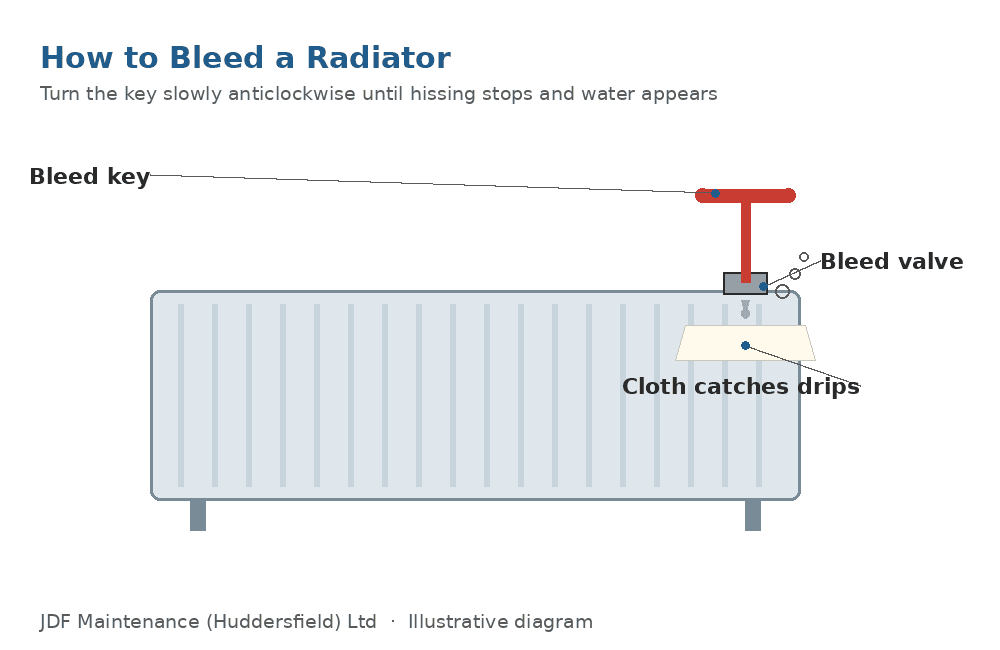
- Find the bleed valve. It’s a small square-shaped fitting, usually at the top corner of the radiator, either on the left or the right.
- Hold your cloth or container underneath the valve to catch any drips, and lay your towel down below it, since a little water almost always escapes.
- Insert the bleed key into the valve and turn it slowly anticlockwise, about a quarter turn. You’ll hear a hissing sound straight away as the trapped air escapes; that’s exactly what you want to hear.
- Keep the key steady until the hissing stops completely and a few drops of water appear; that’s your sign that all the air is out and the radiator is full again.
- Close the valve by turning the key clockwise, snugly but without overtightening, as forcing it too far can damage the valve.
- Wipe away any water and repeat the same process on any other radiators showing the same symptoms, working through your home one room at a time.
- Once you’ve finished all the radiators that needed it, check your boiler pressure and top it up if needed; see the next section for how.
After You’ve Bled It: Check Your Boiler Pressure
Letting air and water out of the system almost always drops your boiler’s pressure a little, so it’s worth checking the pressure gauge once you’ve finished bleeding. Most boilers have a normal operating range marked on the gauge, often shown in green. If it’s dropped below that range, you’ll usually need to top it up using your boiler’s filling loop, a simple valve that lets fresh water back into the system. We’ve written a full guide on this in Why Does My Boiler Keep Losing Pressure?, which walks through topping up safely, step by step, and what it means if the pressure keeps dropping again afterwards.
When to Call a Professional Instead
Bleeding a radiator is usually a quick DIY fix, but it’s worth calling in a professional if a radiator needs bleeding repeatedly within a short space of time, if your boiler pressure keeps dropping even after topping up, or if you’re simply not comfortable doing it yourself. Any of these can point to a more persistent leak somewhere in the system, a failing valve, or a fault that’s worth having checked properly rather than guessed at. A radiator that needs bleeding once every year or two is completely normal; one that needs it every few weeks usually isn’t, and there’s no harm in getting a second opinion rather than continuing to top up and bleed on repeat.
Frequently Asked Questions
A few of the most common questions people ask about radiator bleeding, alongside our full round-up of boiler service queries after bleeding a radiator if you want to go further.
Does a boiler service include bleeding radiators?
Usually not by default; a standard service focuses on the boiler itself. That said, most engineers, including ours, will happily bleed your radiators on request during a visit, so just ask when you book.
Do you need to bleed radiators after a boiler service?
Not necessarily, but it’s worth checking. If a radiator was showing cold spots before the service, it’s a good moment to bleed it, and your engineer can do this for you if you mention it.
How often should you bleed your radiators?
Most homes need it around once a year, or whenever you notice cold spots or gurgling. Some radiators may need it more often if your system regularly collects air.
Can bleeding a radiator cause a leak?
It’s very unlikely if done correctly and gently. Leaks are usually a sign of a worn valve rather than something bleeding itself causes. If you notice a steady drip after closing the valve, that’s worth getting checked rather than something to worry about immediately.
Still Not Heating Properly?
If bleeding your radiator doesn’t solve it, or the problem keeps coming back, we’re happy to help. Get in touch with JDF Maintenance, and we’ll take a look, or if it’s been a while since your last check-up, it might be a good time to book a boiler service.